Over the last few years, I’ve visited the homes of several grands hommes français – from scientists and engineers to writers and artists. Preserved as museums to showcase their lives, works, and legacy, they are not as well-known as some of the museums, and thus not crowded, making them a pleasure to visit. To me, they are an invitation to enter their private domain, a way to feel their creative process and peek into the lives of the people of their era. I’ve been waiting to visit the Maison Caillebotte, former estate of Impressionist painter Gustave Caillebotte, for nearly two years, and even more so after we went for the Caillebotte exhibition at Orsay last November. This weekend, we finally crossed it off the bucket list.
Set in a sprawling property in Yerres, just outside Paris, Maison Caillebotte is an elegant mansion featuring richly decorated rooms with period furniture, intricate woodwork, and large windows that flood the space with natural light, reflecting Caillebotte’s artistic fascination with luminosity and outdoor scenes. The lack of personal memorabilia, documents and original works by the artist made the house more of a glimpse into the refined lifestyle of a wealthy 19th-century bourgeois family, than a dedication to the artist, his work and his life.
Walking through the house, I found myself comparing Caillebotte’s life to that of other artists in the 19th century. I already knew from the books I’ve read on the Impressionists, as well as the exhibition at Orsay that Caillebotte had a very comfortable and bourgeois lifestyle, in stark contrast to the bohemian lifestyle of some of his Impressionist peers. The property is a reflection of both his social status and his deep appreciation for modernity and nature. The richly furnished rooms with high ceilings reflect the wealth of the Caillebotte family.
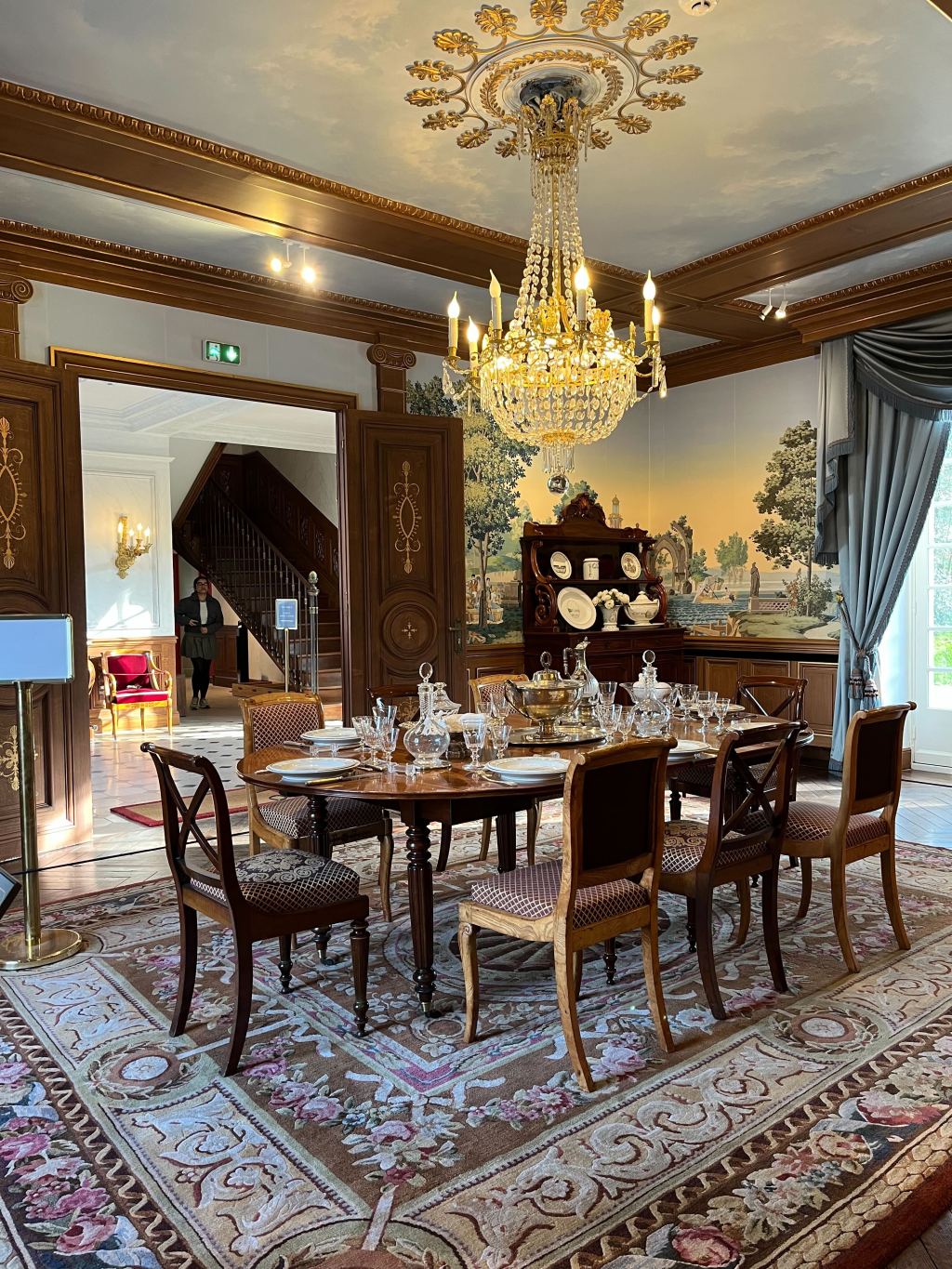
The Caillebotte dining room, for example immediately reveals a certain grandeur and refinement, characteristic of an affluent 19th-century bourgeois family. The large chandelier, and richly decorated walls with scenic murals elevate the space into one meant for hosting and social display. The furniture, including the finely crafted wooden chairs and polished table, are a display of wealth and sophistication. The elaborate carpet and the heavy curtains further emphasise the formal and aristocratic nature of the room.


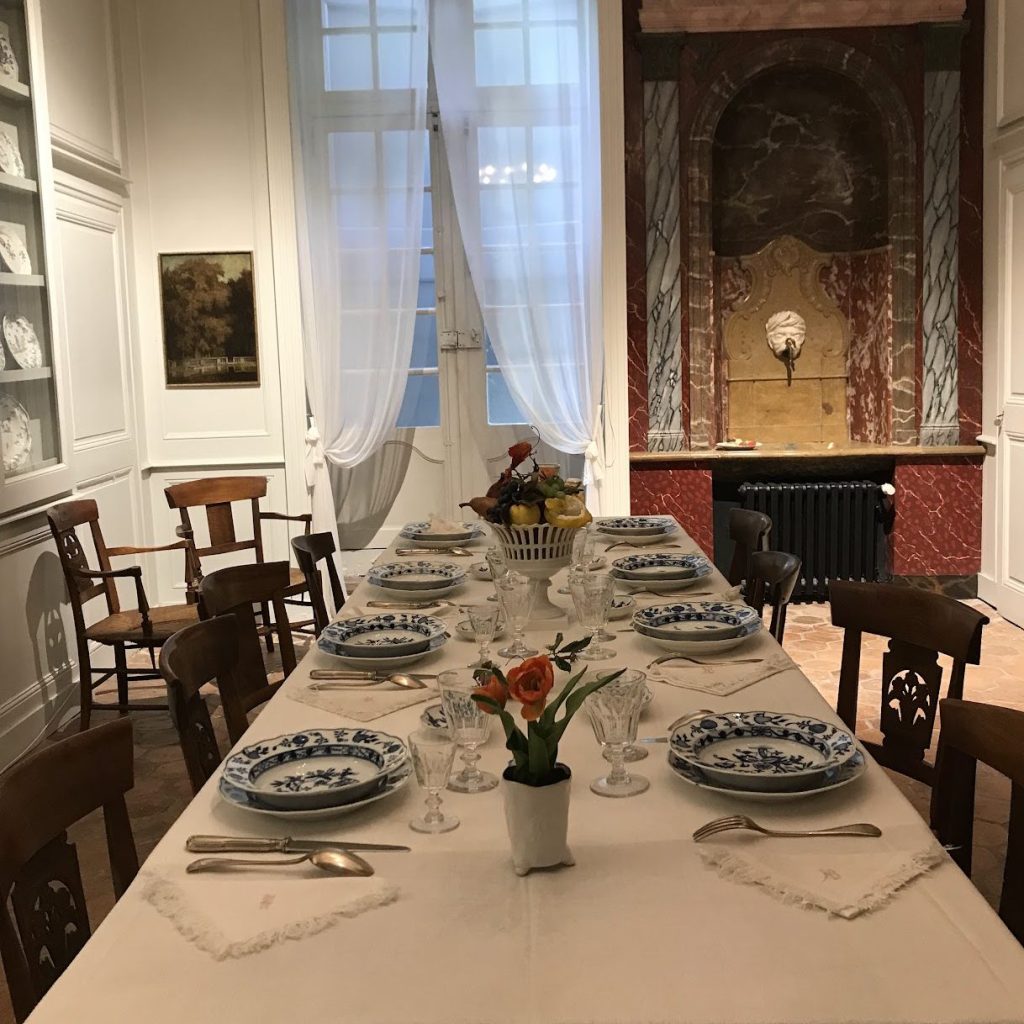
This dining room was in stark contrast to the one I saw Musée Hébert (of the same period) – simpler and more rustic aesthetic, suggesting a cozy and intimate atmosphere. The wooden chairs, white tablecloth, and blue-and-white porcelain plates created an elegant yet modest setting. The presence of a wall fountain and the natural light filtering through sheer curtains add charm, but the space lacks the opulence of the Caillebotte dining room.
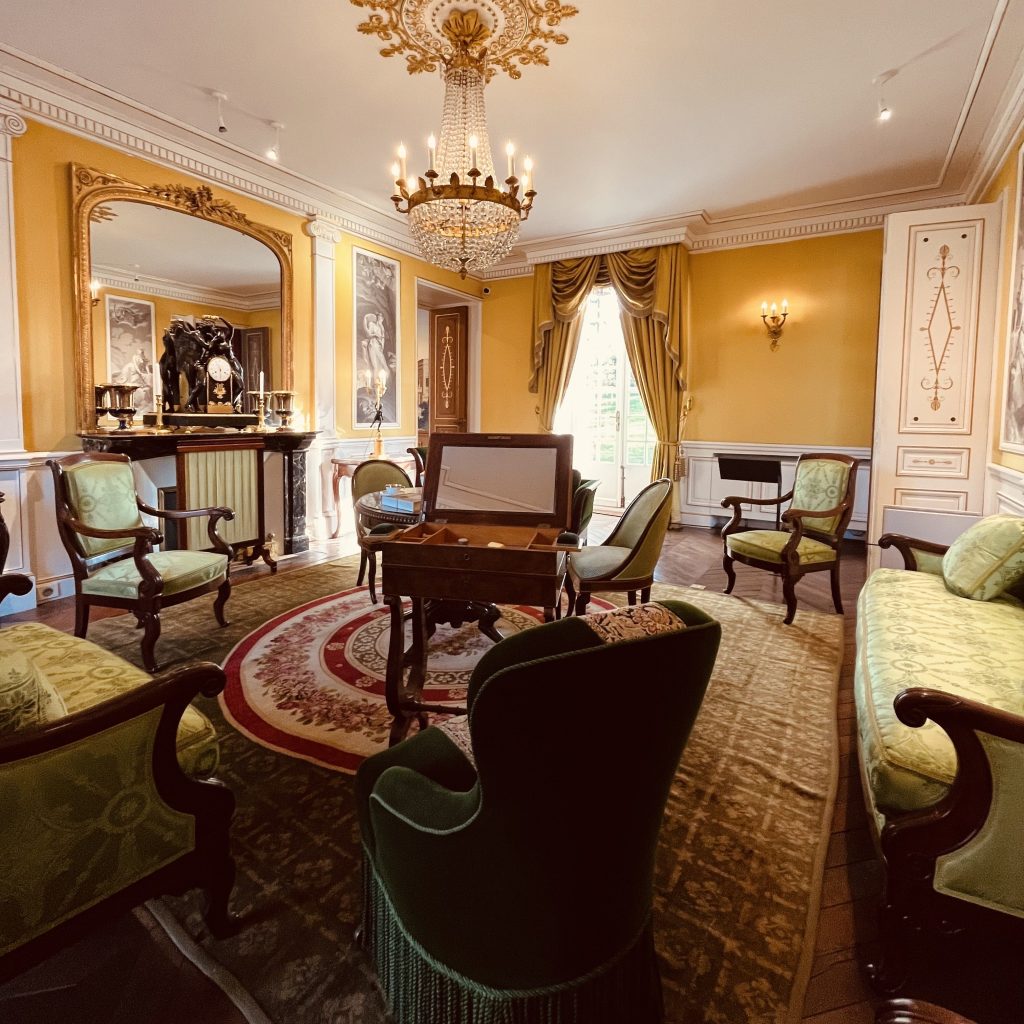
Yet, I wouldn’t say that Caillebotte’s home was devoid of charm and coziness. The music room, for instance is an intimate yet refined space with large windows that allow natural light to stream in, enhancing the warm and inviting atmosphere. The room looks like a place where family members, or guests, would gather for informal performances or quiet moments of artistic reflection.

The Caillebotte property is not just notable for its elegant interiors but also for its expansive and beautifully landscaped gardens, which played a crucial role in Gustave Caillebotte’s artistic inspiration. Spanning several hectares, the estate features a picturesque English-style park, which also includes a riverbank and boating area, reflecting Caillebotte’s love for water scenes, frequently depicted in his paintings.


I love how walking through these houses (even when restored recently and exuding a certain modernity in the upholstery fabric & finish) is such a wonderful way to understand the artist’s personality & lifestyle. Maison Caillebotte was no exception.
🚂 If I’ve succeeded in making you want to visit Maison Caillebotte, getting there from Paris is simple! If you have a Pass Navigo covering all zones, your train ride is already included! All you have to do is take the RER D from Gare du Nord / Châtelet-Les Halles / Gare de Lyon (direction Combs-La-Ville – Quincy). The journey takes about 30 minutes. Once you arrive at Yerres station, it’s a 10-minute walk to the estate, where you’ll step into the world of 19th century bourgeois elegance.
 PlainGeets
Leave a comment