I have come to realise that grief is a bit like those relatives who arrive for a “short stay” and quietly become permanent residents of the house.
At first everyone notices them. There is concern about their comfort. You accommodate, offer tea, snacks and entertainments in the form of conversation and outings. A few weeks later, everyone else simply adjusts to their presence and expects you to do the same.
Twenty years ago, when Papa passed away suddenly during a trip, grief arrived like a violent storm system. It was loud, public and unavoidable. There was paperwork, relatives, logistical chaos, and the peculiar numbness that accompanies sudden loss. We were, in many ways, on the cusp of something better as a family, and his death felt brutally timed in the way life seems to specialise in.
But underneath the larger family tragedy sat another more personal grief. Papa and I were supposed to discuss my future plans once he returned from his trip. I was torn between pursuing a PhD in Literature and applying for a Masters FLE programme in France. Like most discussions in our family, it would probably have involved equal parts ambition, practicality and unsolicited caution. But that conversation never happened.
In the months that followed, the Alliance Française became an unexpected refuge. Not emotionally perhaps – there is very little emotional refuge available when grief is fresh – but physically and mentally. It forced movement upon me. I had to wake up, dress smartly, catch buses to get to class before my students, interact with people, correct pronunciations, explain grammar and generally behave like a functional member of society despite feeling internally like an abandoned building.
Looking back, I know that routine saved me, because grief, left entirely unattended, has a tendency to spread into every available corner of life like damp during monsoon season. The Alliance Française network gave me structure at a time when I badly needed it. More importantly, it gave me a vocation. Not merely employment, but purpose. Which is perhaps why, despite my more recent disappointments with institutional politics, structures and people, I remain deeply attached to it. Some places become important not because they are perfect, but because of who we were when they held us together.
Years later, I find myself dealing with another kind of grief altogether.
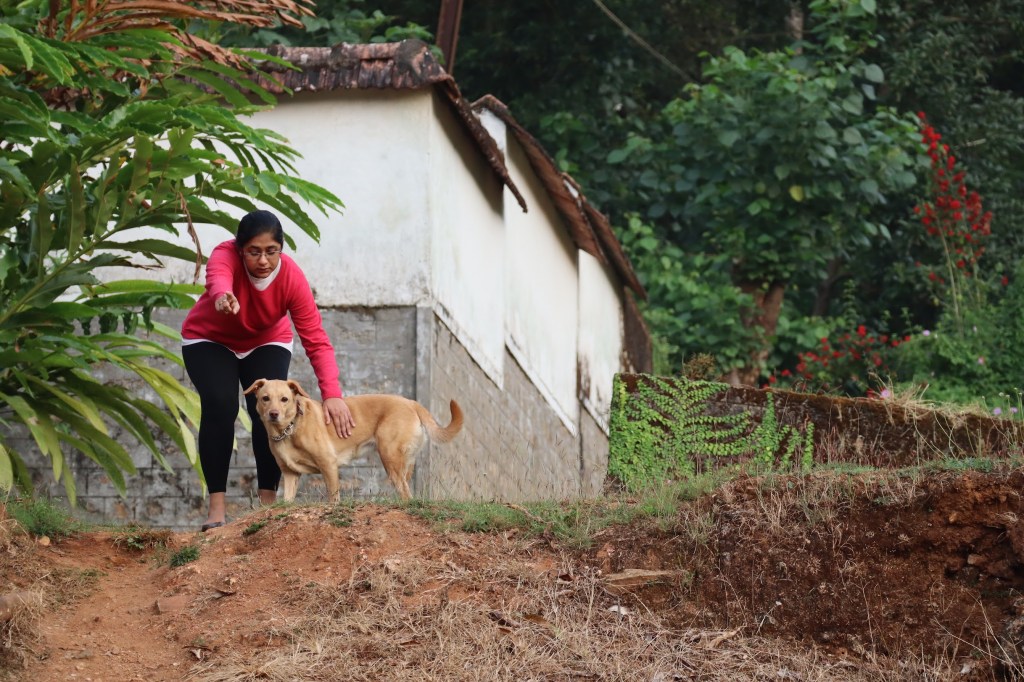
It has been nearly six months since Arya left us, and I remain surprised by how physically present absence can feel.
Nobody really prepares you for the bureaucracy of absence. The tiny systems that collapse quietly afterwards. Schedules. Timings. Objects that belonged to those who’ve left us. More importantly, nobody really prepares you for the bureaucracy of pet grief. Human grief at least comes with rituals and social scripts. People know what to say. There are condolence messages, ceremonies, phone calls and socially sanctioned mourning periods.
With pets, the world is sympathetic for approximately ten minutes before expecting normal service to resume. In the beginning, people checked in frequently. Daily sometimes. Then weekly. Then occasionally. Now, mostly, life has moved on for everyone else.
To be fair, even I didn’t expect to feel crippled six months later.
Instead, grief has settled into the house like an oddly committed tenant. There are utensils I still cannot use because they were used to prepare her food. An entire bottle of coconut oil remains emotionally categorised as “Arya’s coconut oil” despite being chemically identical to every other bottle of coconut oil available in the country. I still occasionally turn a corner expecting to find Arya sniffing around. At night, half asleep, I sometimes feel the phantom pressure of her curled against my legs. The body develops habits of companionship that apparently do not disappear simply because logic intervenes.
What makes this grief particularly absurd is that none of it was unexpected. Arya was a senior dog. Rationally, I knew time was no longer an abstract concept. In the last six months, there had been medications, careful monitoring, adjustments to routines, increasingly frequent vet visits and the negotiations one makes with ageing – human or canine.
And yet, I remained entirely unprepared.
The worst part of grief, perhaps, is the retrospective editing. Replaying moments repeatedly and assigning new meaning to them afterwards.
I still think about our last visits to see her in the ICU at the veterinary hospital. At the time, I thought I was comforting her. Now I often lie awake wondering whether she was trying to tell us something we simply failed to understand. Whether she already knew she was tired. Whether she was frightened. Whether staying longer would have changed anything. I replay those last minutes over and over till it’s almost time to wake up.
Grief is generous with guilt. It supplies it freely, even where nothing existed before.
At first, Ajmer and Bhaskar helped us the way Alliance Française once had in 2006. Work created useful distractions. Logistics. Planning. Problem-solving. Grief, for brief stretches, remained outside the room waiting politely while I answered emails. For several hours at a stretch, we almost felt normal.
But grief is persistent.
It sneaks in through side entrances, through some entirely unnecessary detail. A shaft of afternoon sunlight on the floor. A glimpse of fur on another dog. Google Photos and Facebook sending memories. Passing by the section of the kitchen where her vessels used to be kept.
And suddenly there it is again.
Not in any dramatic or cinematic manner. Just the quiet, unrelenting pressure of an ache sitting squarely in the middle of an otherwise ordinary Tuesday afternoon, and the struggle to blink away tears before someone notices.
People often say time heals grief. I suspect time merely teaches grief better manners. It becomes less publicly disruptive, and more discreet. It learns to sit quietly in the corner while you continue attending meetings and replying to messages and pretending to care about the alignment of elements in the Google Form header on Canva.
But every now and then, it still clears its throat to remind you that it exists.
I suspect some griefs are not meant to be overcome. They simply become part of the architecture of who we are.
Like old houses built around courtyards no longer used, but never demolished.


Leave a comment